How to Teach Heart Words Using the Science of Reading

Heart word practice aligned to the Science of Reading for teaching high frequency words
How many times have you had a student get stuck on a high frequency word, even after repeated exposure?
You practiced was all week. Flash cards. Read it in context. Reviewed it again.
Then your student sees was and says:
/w/ /a/ /s/ (with the short a sound)
They’re doing exactly what we’ve taught them, applying phonics. But in this word, the vowel doesn’t follow the expected pattern.
If this sounds familiar, you are not alone.
But, this isn't a memorization problem.
High frequency words do not need to be memorized.
They need to be mapped.
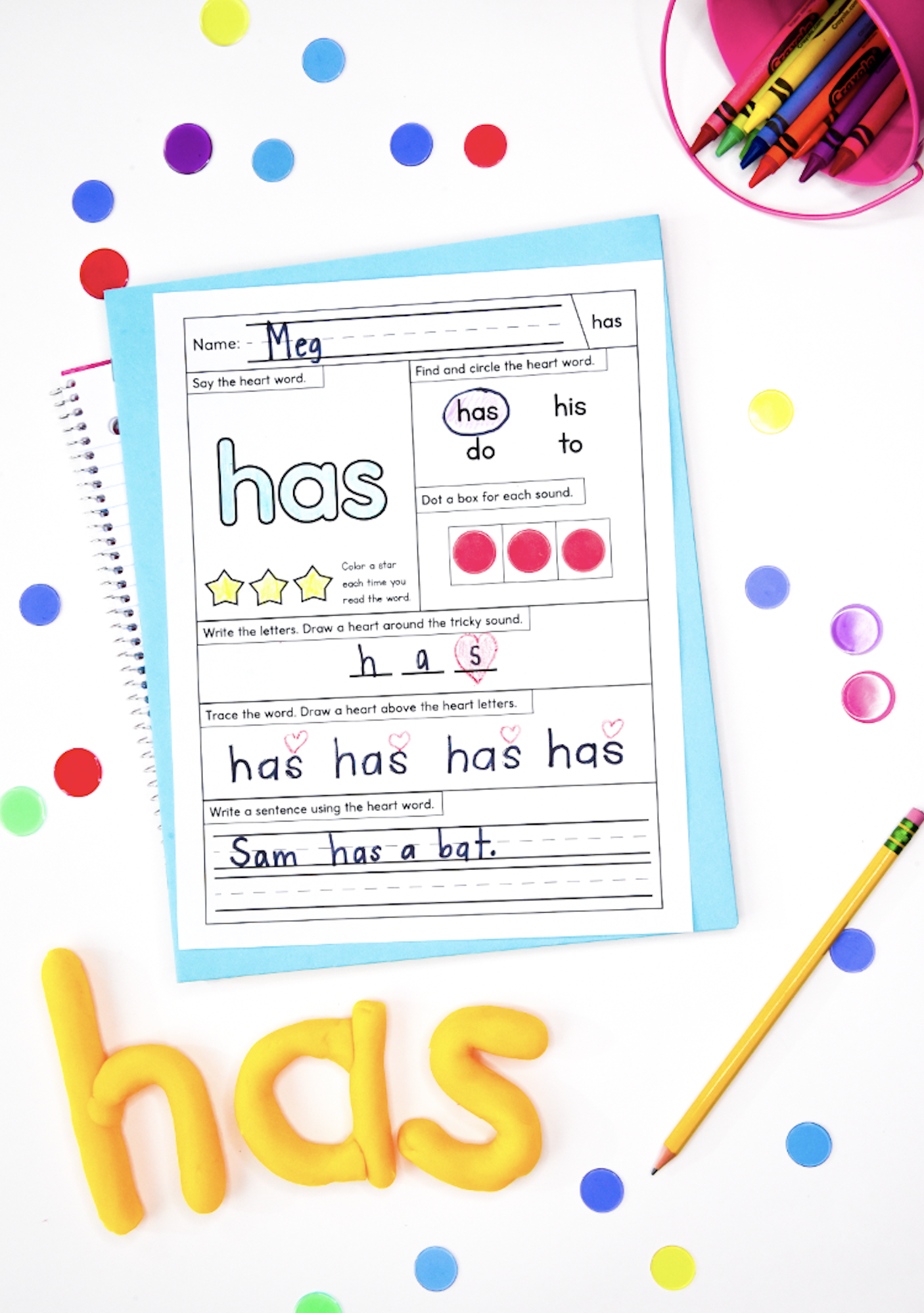
In a Science of Reading aligned classroom, students learn high frequency words by connecting sounds to spellings through a process called orthographic mapping.
The heart word method gives students a structured way to do exactly that.
Here are the Downloadable Files — Heart Words (SOR-aligned):
- Heart Words Poster - Free Download (PDF)
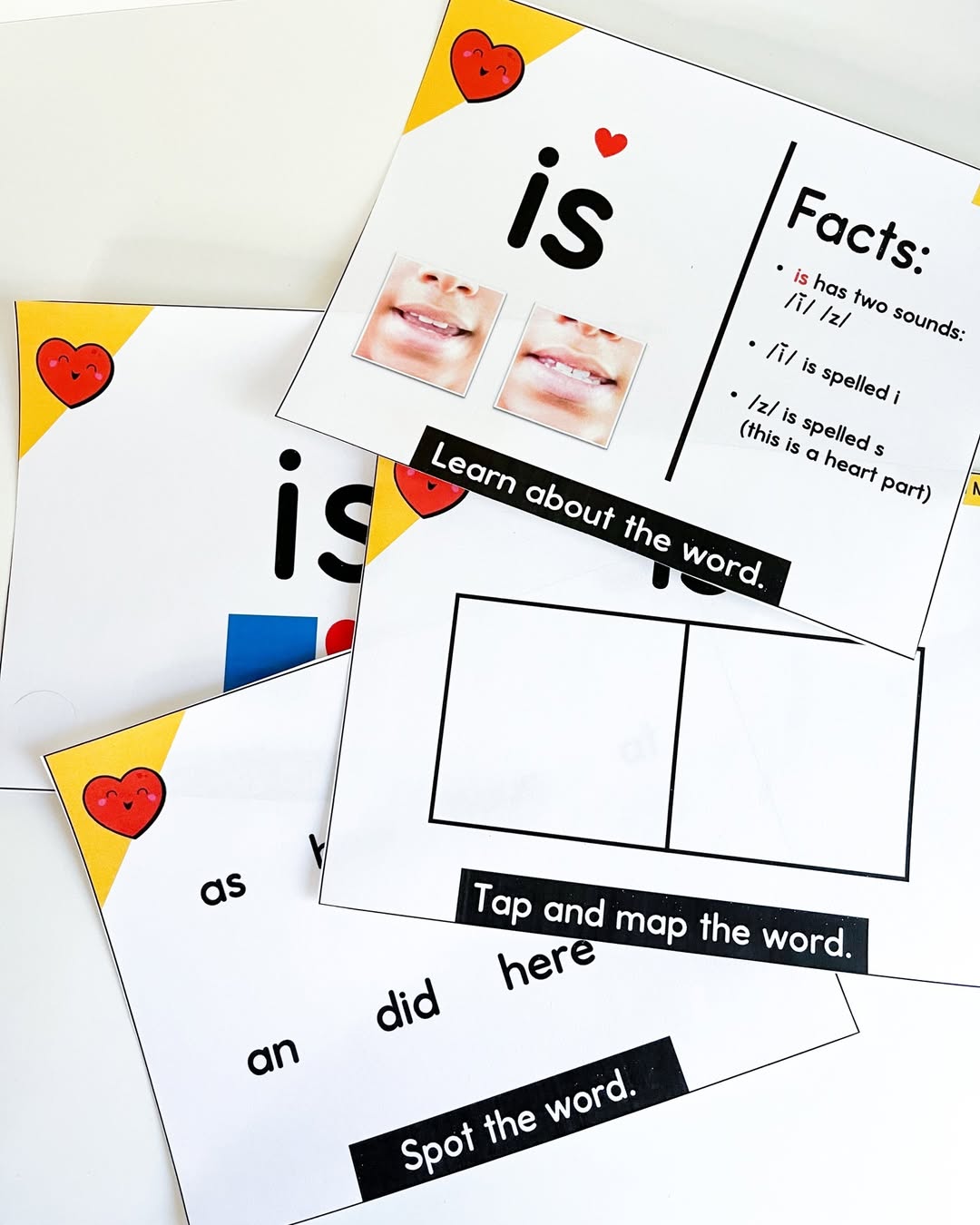
- Heart Word Slides/Task Cards for ‘was’ - Free Download (PDF)
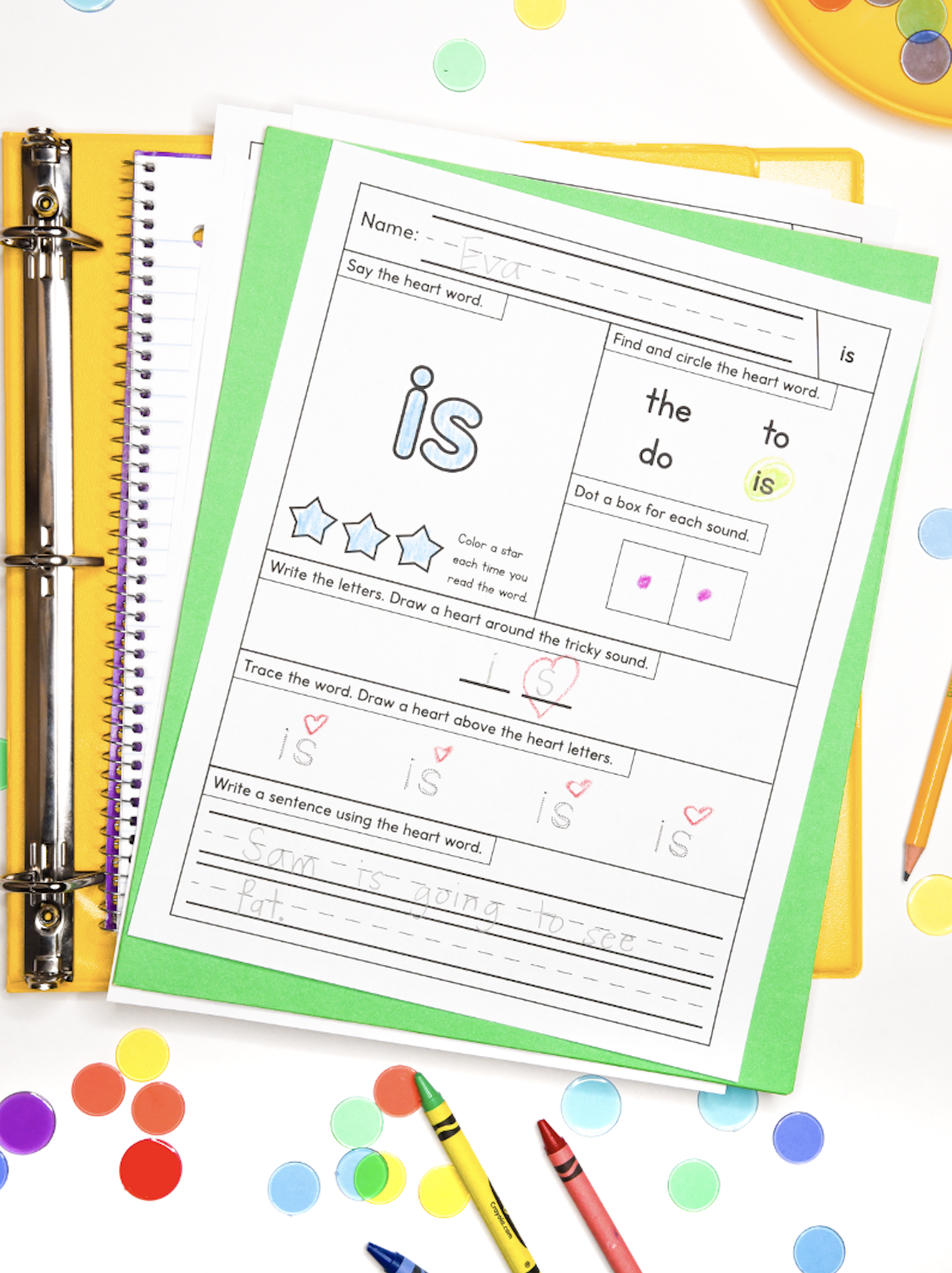
- Heart Word Practice Sheets for ‘was’ - Free Download (PDF)
- Heart Word Brochure for ‘was’ - Free Download (PDF)
- Heart Word Explanation Letter for Parents - Member Only (PDF)
- Heart Word Slides/Task Cards (all words) - Member Only (PDF + Google Slides)
- Heart Word Practice Sheets (all words) - Member Only (PDF)
- Heart Word Brochure (all words) - Member Only (PDF)
Heart Word Learning Objective
Students will identify the regular and irregular parts of a high frequency word by mapping phonemes to graphemes and marking the tricky portion.
Materials Needed
Here are the materials you will need for this activity:
- a target heart word (example: was) - on a slide or task card
- sound boxes or mapping boxes
- letter tiles, magnetic letters, or dry erase marker
- student recording sheet or notebook
- a simple sentence using the target word
Optional:
- pocket chart
- highlighter
- heart word anchor chart or slide
What Are Heart Words?
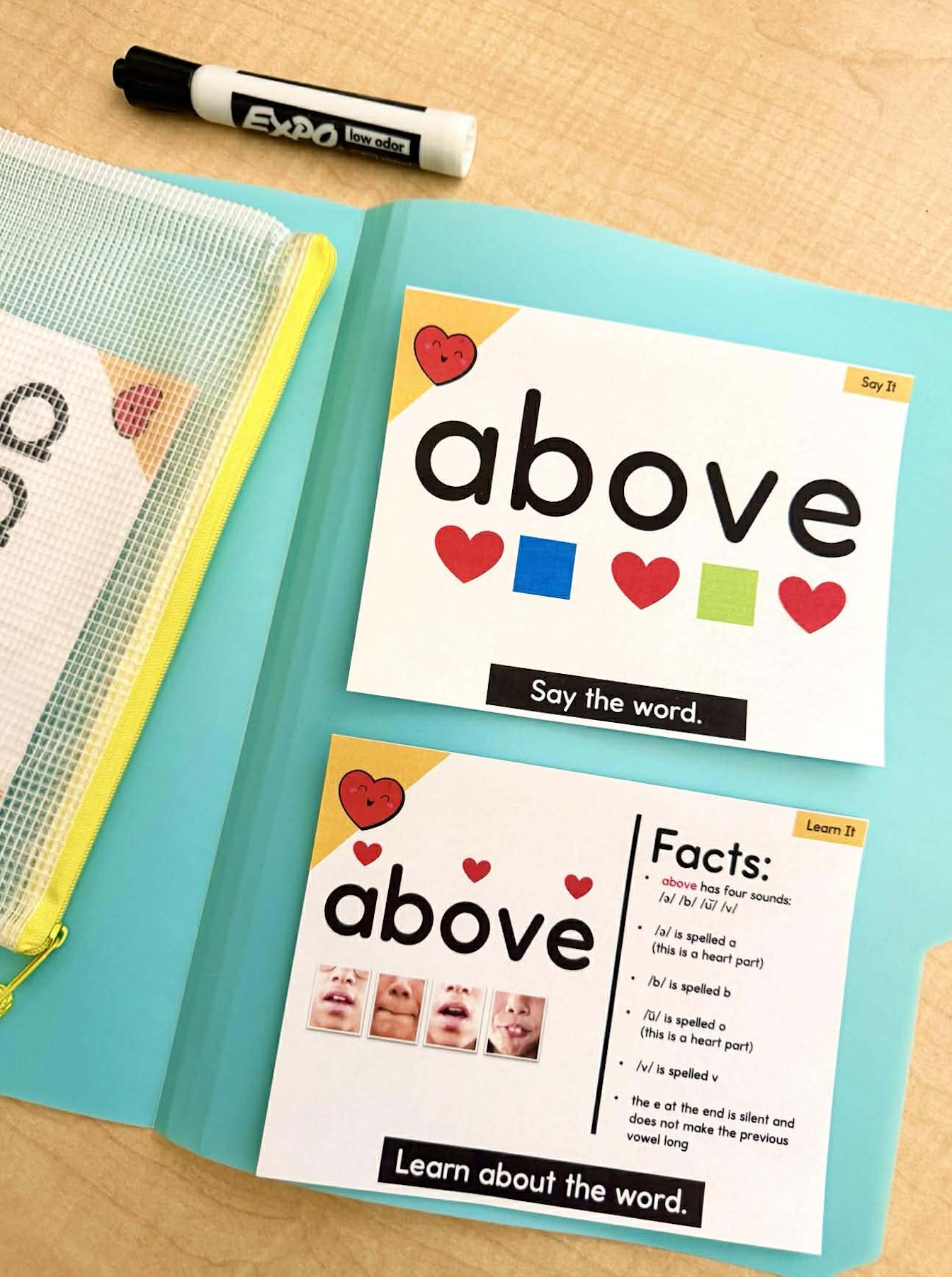
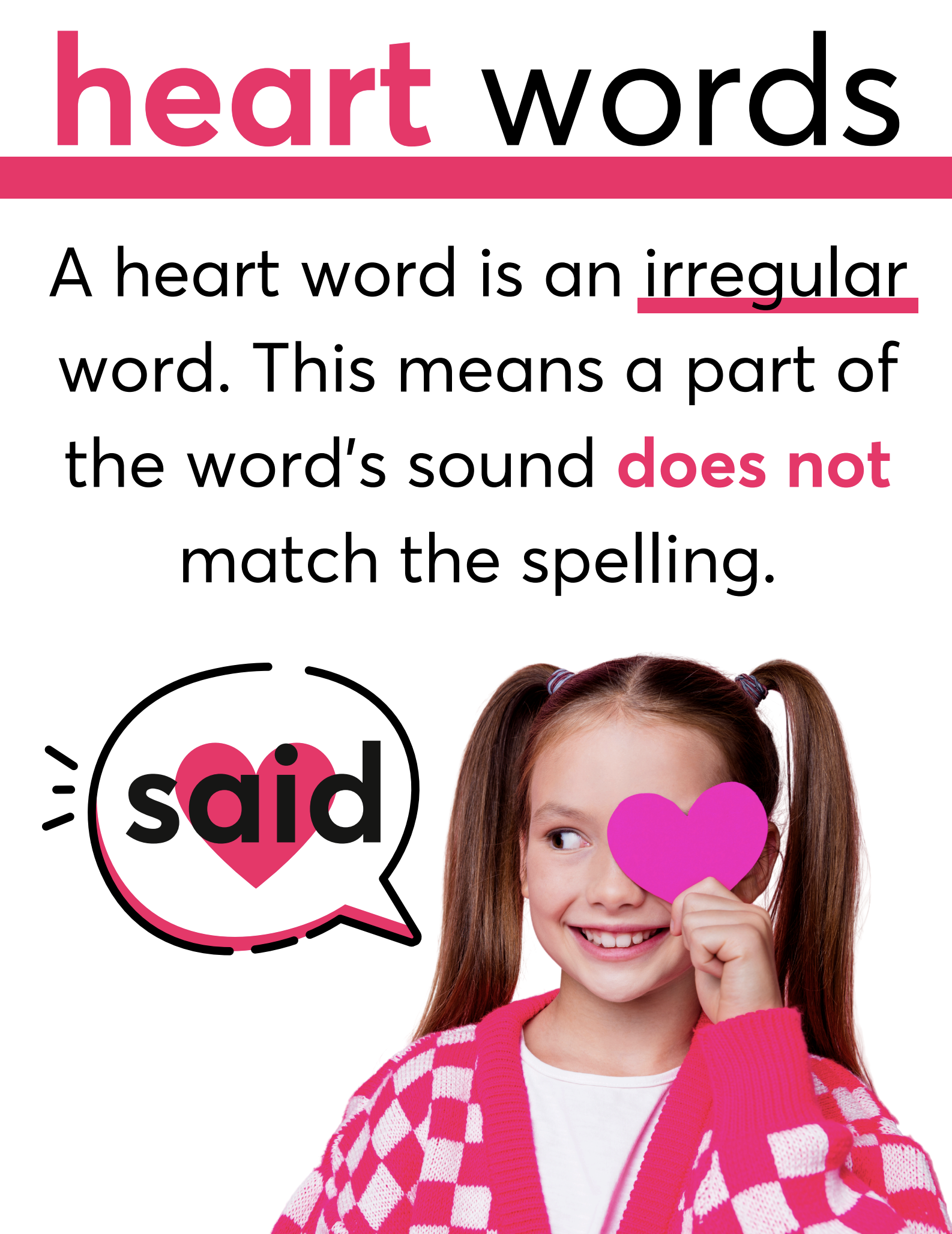
Heart words are high frequency words that contain at least one irregular sound-spelling.
Instead of memorizing the entire word, students:
- Map the sounds to the letters to anchor the word in phoneme–grapheme connections.
- Analyze what is regular and identify the tricky part that doesn’t match expected patterns.
- Store the word in memory through repeated, accurate reading and writing practice.
This keeps instruction aligned to structured literacy and helps students store words in long-term memory more efficiently.
Heart Word Activity Procedure
Step 1: Introduce the Target Word
Display the word for students.
For example, introduce the word was.
Say the word aloud and have students repeat it several times.
You might say:
“This is a word we see often when we read, so we want our brains to know it automatically.”
This step builds familiarity before analysis begins.
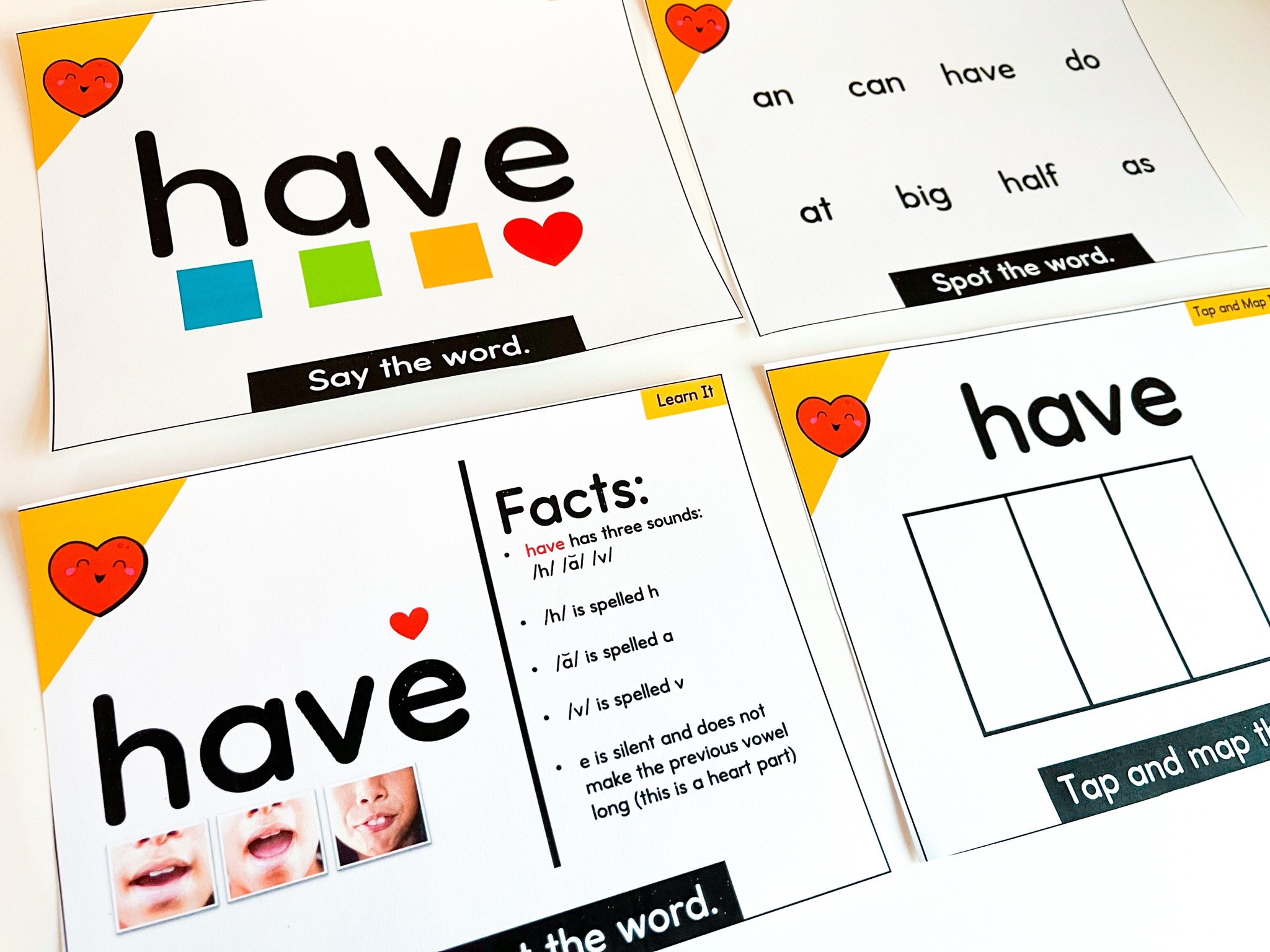
Step 2: Say the Sounds in the Word
Guide students in segmenting the sounds in the word.
For was, students would say:
/w/ /u/ /z/
Have students tap or count each sound.
This step is critical because students must hear the sounds before mapping them to letters.
Step 3: Map the Sounds to the Letters
Now connect each sound to the letters in the word using sound boxes or by writing the word together.
Walk through each part:
- w says /w/
- a is the tricky part because it represents the /u/ sound in this word
- s represents /z/ in this word
Help students notice which parts match their phonics knowledge and which part does not.
Step 4: Heart the Tricky Part
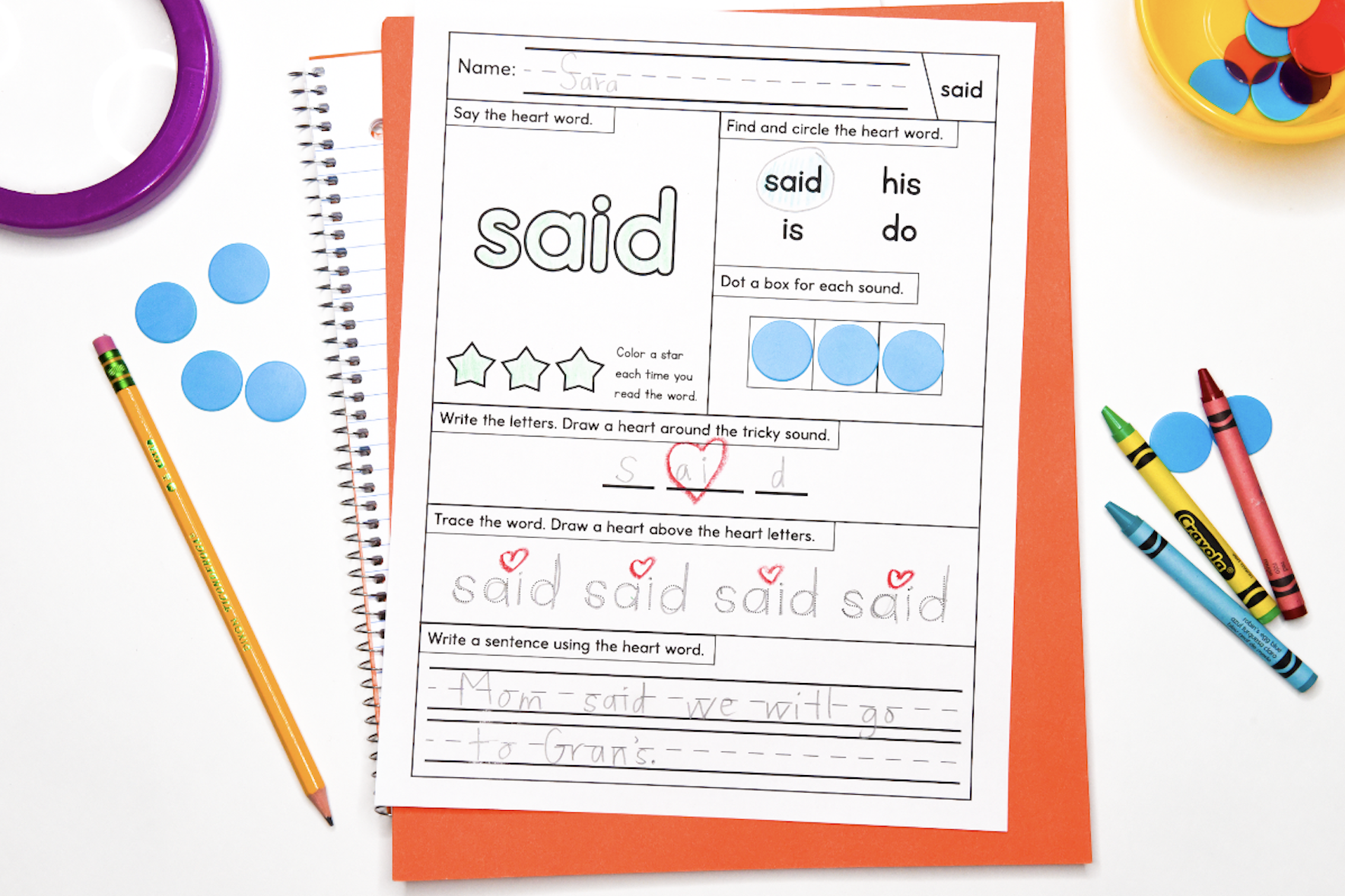
Draw a heart over the irregular portion of the word.
In the word was, most students will identify the a as the heart part.
You might say:
“We can sound out the parts we know, and we will put a heart over the part we have to remember.”
This step ensures students are not memorizing the entire word, only the part that is not yet predictable.
Step 5: Read the Word Again
Have students read the word again.
Point to each letter, say the sounds, then blend the word.
Repeat this several times so students connect the analysis back to fluent reading.
Step 6: Write the Word
Have students write the word on a whiteboard, paper, or in a notebook.
Encourage them to:
- say the sounds as they write
- think about the heart part
Writing reinforces the connection between reading and spelling.
Step 7: Read the Word in a Sentence
Place the word into a simple sentence.
Example:
He was on the rug.
Have students read the sentence aloud.
This helps students practice the word in connected text and supports automatic recognition during real reading.
Why This Routine Works
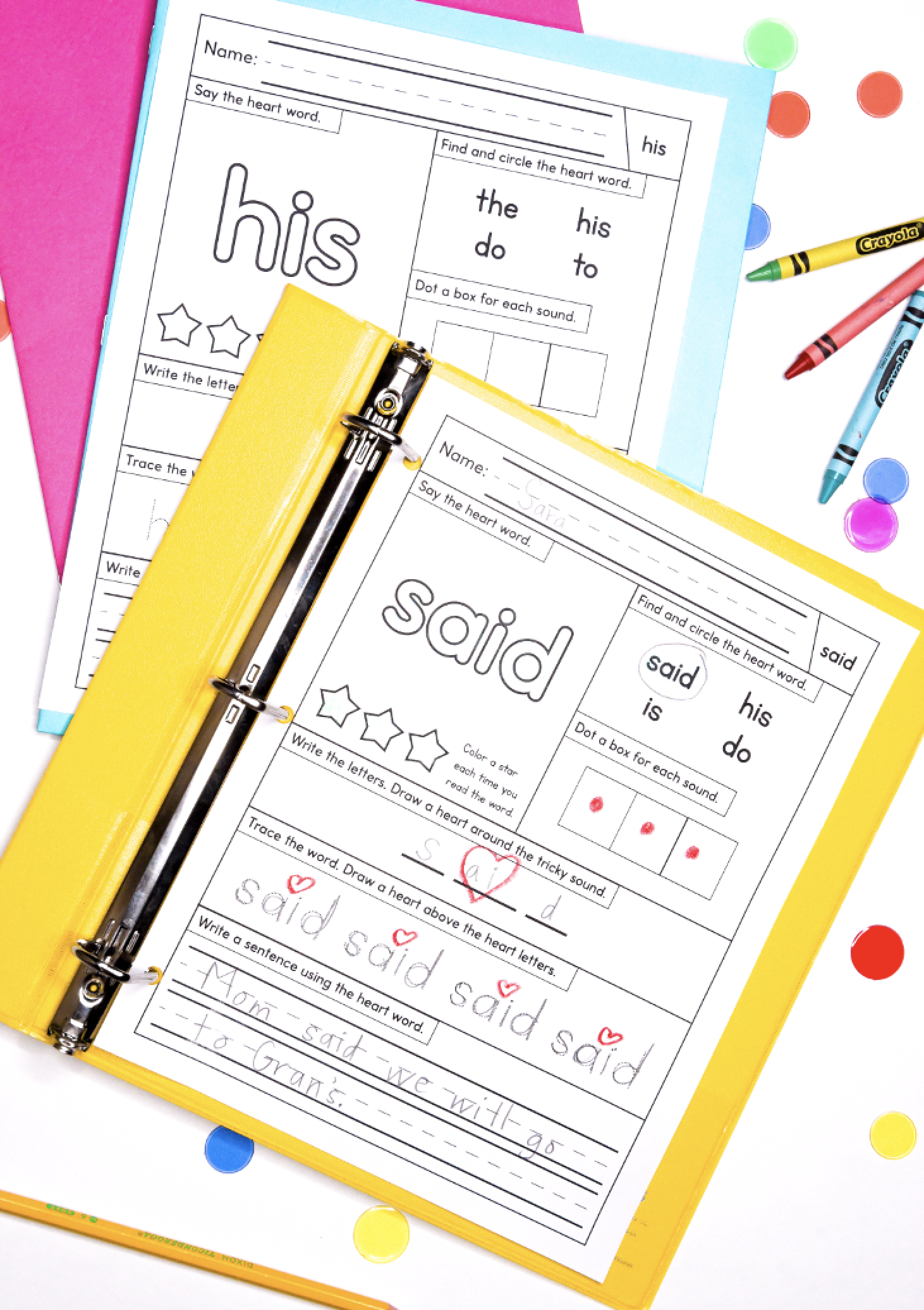
his routine supports orthographic mapping by helping students connect sounds to spellings in a structured way.
Students are:
- hearing and saying the word
- segmenting the sounds
- mapping phonemes to graphemes
- identifying the irregular portion
- reading and writing the word
- applying it in context
Instead of relying on memorization, students are building a mental map of the word that allows for faster and more accurate recognition over time.
Tips for Using This Routine in the Classroom
This routine can be used in a variety of instructional settings.
Whole Group
Model the process and guide students through each step together.
Small Group
Provide additional support and allow students to practice with guidance.
Intervention
Slow the routine down and spend extra time analyzing the tricky portion.
Independent Practice
Once students know the routine, they can complete heart word mapping independently.
Whenever possible, introduce heart words alongside phonics patterns students are already learning so the word makes sense from a sound–spelling perspective.
Here are the Downloadable Files — Heart Words (SOR-aligned):
- Heart Words Poster - Free Download (PDF)
- Heart Word Slides/Task Cards for ‘was’ - Free Download (PDF)
- Heart Word Practice Sheets for ‘was’ - Free Download (PDF)
- Heart Word Brochure for ‘was’ - Free Download (PDF)
- Heart Word Explanation Letter for Parents - Member Only (PDF)
- Heart Word Slides/Task Cards (all words) - Member Only (PDF + Google Slides)
- Heart Word Practice Sheets (all words) - Member Only (PDF)
- Heart Word Brochure (all words) - Member Only (PDF)
Important Note About Heart Words
Not all high frequency words are heart words.
Some words are fully decodable based on students’ phonics knowledge. These are often called flash words.
Flash words are fully decodable and should be taught alongside phonics patterns, while heart words contain only a small part that must be remembered.
Other words may be temporary heart words, meaning they only contain a tricky part because students have not yet learned that phonics pattern.
This is why heart word instruction should always align with your phonics scope and sequence.
Final Thoughts
High frequency words do not need to be memorized as whole words.
They need to be explicitly taught through sound-spelling connections so students can map them into memory.
Many high-frequency words are actually fully decodable once students learn the necessary phonics patterns.
When students say the word, segment the sounds, map the letters, heart the tricky part, write the word, and read it in context, they are building the foundation for automatic word recognition.
That is what makes heart word instruction so powerful in a Science of Reading classroom.
Want More Literacy Support and Resources?
To gain unlimited access to all of our literacy and writing content, join the Literacy Teacher Community!
Here you will find hundreds of literacy and writing lessons, a community of teachers for support, and literacy and writing materials that are always up to date with the latest research.
Simply click the image below to get all of our lessons and resources.
If you’d like access to the resources I share about in this blog post, along with all of my other literacy and writing resources, you can find everything inside Literacy All-Access.
Inside the membership, you’ll find a wide range of structured, engaging literacy resources designed to support your phonics instruction—from decodable passages and targeted practice activities to small group tools and lesson supports—so you can spend less time creating and more time teaching.